Error

Buy Real gold starting AED 10. Best price guaranteed. Vaulted in your name.

Blog

Your blog category

What Fractional Shares Are and Why They Are Changing How People Invest

What Fractional Shares Are and Why They Are Changing How People Invest Introduction For a long time, investing in the stock market came with a simple but limiting rule: you had to buy at least one full share of a company. This meant that if a company’s share price was high, access was restricted. For many investors, especially those beginning their journey in online trading or exploring the best trading platform in UAE, this created an immediate barrier. High-quality companies were visible, but not always accessible. This is where fractional shares have changed the equation. Fractional investing has made it possible to participate in global markets without needing large amounts of capital. It has shifted the focus from affordability to allocation, allowing investors to start building diversified portfolios with whatever amount they are comfortable investing. As online trading platforms and modern trading apps continue to evolve, fractional shares are becoming a standard feature rather than an added convenience. Platforms like Sav Wealth have helped make this shift possible by allowing investors in the UAE to access US stocks and ETFs through fractional investing, making global investing accessible to a much wider audience. What Are Fractional Shares? Fractional shares represent a portion of a full share of a company. Instead of purchasing an entire share, investors can buy a fraction based on the amount they wish to invest. This means ownership is determined by the value of your investment rather than the number of whole shares you own. For example, if a company’s share price is $200, you do not need to invest the full amount to gain exposure. You could invest $20, own 10% of one share, and participate proportionately in any gains or losses. Fractional investing changes the traditional relationship between investors and share prices. It means: Ownership is proportional to the amount invested. Investment returns are aligned with the percentage owned. High share prices no longer prevent investors from participating in leading global companies. Today, fractional investing has become a key feature offered by many stock trading platforms, making it easier than ever for first-time investors to begin building wealth. Why Fractional Shares Matter Today The growing popularity of fractional shares reflects a broader transformation in investing. Many of the world’s most valuable companies trade at relatively high share prices. While these businesses often drive innovation and long-term economic growth, purchasing even a single share may require a significant investment. Fractional investing removes that barrier. Instead of waiting until you can afford an entire share, you can begin investing immediately and gradually increase your holdings over time. This allows investors to: Participate in globally recognised companies without large capital. Allocate money more efficiently across multiple investments. Build diversified portfolios much earlier in their investing journey. For investors following the US market today, fractional shares transform investment opportunities from something to observe into something they can actively participate in. How Fractional Investing Changes Investor Behaviour Fractional shares do much more than reduce the amount of money required to invest. They fundamentally change how people think about building portfolios. Instead of asking, “Can I afford this company’s share price?” investors begin asking, “How much of my portfolio should I allocate to this company?” This shift encourages more thoughtful investing decisions. Rather than concentrating all available capital into one or two investments, investors can distribute their money across multiple businesses, sectors, and industries according to their financial goals. For beginners using a trading app, this makes investing feel considerably less intimidating. It removes the perception that investing is only possible once significant savings have been accumulated. Platforms like Sav Wealth reinforce this approach by enabling investors to build portfolios gradually through fractional investing, allowing users to focus on long-term investing habits instead of waiting until they have accumulated larger amounts of capital. Building a Portfolio with Smaller Amounts One of the greatest advantages of fractional investing is the ability to diversify from the very beginning. Traditionally, investors with smaller budgets often had to choose between purchasing one or two individual companies because buying multiple stocks required significantly more capital. Fractional shares change this dynamic. Instead of placing all available funds into a single investment, investors can spread their money across different companies, sectors, and industries. This helps to: Reduce concentration risk. Improve diversification. Build portfolios aligned with long-term financial goals. Diversification, which was once associated primarily with larger portfolios, has now become accessible to almost everyone through modern online trading platforms. The Role of the US Market The US stock market has played an important role in the widespread adoption of fractional investing. It includes many of the world’s largest publicly listed companies across industries such as technology, healthcare, finance, consumer goods, and artificial intelligence. Because many of these companies trade at relatively high share prices, fractional investing allows investors to gain exposure without requiring the capital needed to purchase whole shares. For investors monitoring the US market today, this creates opportunities to participate in global innovation regardless of portfolio size. Instead of being limited by affordability, investors can make decisions based on strategy and long-term objectives. Precision in Investing Fractional investing also introduces greater precision into portfolio management. Rather than adjusting investments according to share prices, investors can decide exactly how much money they wish to allocate to each investment. This allows investors to: Invest exact dollar amounts. Maintain consistent portfolio allocations. Rebalance portfolios more efficiently. Align investments with long-term financial objectives. For example, an investor may decide to allocate 15% of their portfolio to technology companies or 10% to healthcare stocks. Fractional investing makes these allocation decisions much easier to implement without being constrained by individual share prices. This level of precision has become increasingly valuable as more investors manage diversified portfolios through online trading platforms. The Role of Online Trading Platforms The rise of fractional investing has closely followed the growth of modern online trading platforms and mobile trading apps. Not long ago, investing often required larger capital commitments, access through traditional stock brokers in Dubai, and …

What Fractional Shares Are and Why They Are Changing How People Invest Read More »
ETFs vs Stocks Explained | Online Trading Platforms UAE Guide

ETFs vs Stocks Explained | Online Trading Platform UAE Guide Introduction As more investors begin exploring online trading and evaluating the best trading platform in UAE, one of the earliest decisions they face is not just what to invest in, but how to invest. The choice often comes down to two primary approaches: investing in individual stocks or investing through Exchange Traded Funds, commonly known as ETFs. At first glance, both offer access to the same financial markets. Both can be bought and sold through modern online trading platforms, both are available through a trading app, and both allow investors to participate in the growth of companies listed on global exchanges, particularly in the United States. However, despite these similarities, they serve very different purposes. The way they generate returns, the level of risk they carry, and the amount of involvement they require can vary significantly. Understanding these differences is essential because they influence how you build your portfolio, manage market volatility, and pursue your long-term financial goals. Today, platforms like Sav Wealth have made both approaches more accessible than ever by giving investors in the UAE access to more than 10,000 US stocks and ETFs through a simple investing experience. While choosing a platform is important, understanding which investment approach aligns with your objectives is what ultimately shapes your investing journey. What Are Individual Stocks? Investing in individual stocks means purchasing ownership in a specific company. When you buy shares of a business, your investment is directly linked to that company’s success. If the company grows its revenue, improves profitability, launches successful products, or expands into new markets, the value of your investment may increase. Likewise, if the company performs poorly, your investment may decline. For example, investing in a technology company means your returns will largely depend on how effectively that company competes within its industry, responds to innovation, and executes its business strategy. Individual stocks offer several advantages. They provide direct ownership in companies you believe in, allow you to build a portfolio based on your own research, and offer the possibility of generating higher returns if those companies perform exceptionally well. For investors following the US market today, individual stocks also provide opportunities to invest in businesses that are driving innovation across sectors such as technology, healthcare, finance, consumer goods, and artificial intelligence. However, greater opportunity also comes with greater responsibility. Since each investment depends on the performance of a single company, careful research and ongoing monitoring become essential. What Are ETFs? Exchange Traded Funds, commonly referred to as ETFs, offer a different way to invest. Instead of buying shares in a single company, an ETF represents a basket of investments that may include dozens, hundreds, or even thousands of stocks. Rather than relying on one company’s performance, ETFs spread your investment across multiple businesses. Some ETFs track broad market indices, while others focus on specific industries, investment themes, or geographic regions. For example, an ETF may track: The overall US stock market Technology companies Healthcare businesses Dividend-paying companies Artificial intelligence or clean energy sectors This built-in diversification means that the performance of one company has a smaller impact on your overall investment. Like individual stocks, ETFs are traded throughout the day on stock exchanges, making them easy to buy and sell through stock trading platforms, online trading platforms, and modern trading apps. The Core Difference: Concentration vs Diversification The biggest distinction between ETFs and individual stocks lies in how they manage risk. When you invest in individual stocks, your portfolio becomes more concentrated. The success of your investment depends largely on the performance of the specific companies you choose. If those businesses perform well, your returns can be significant. If they underperform, your portfolio may experience larger fluctuations. ETFs, on the other hand, spread your investment across multiple companies. This diversification helps reduce the impact of any single company’s poor performance, creating a more balanced investment experience. Neither approach is inherently better. Instead, they represent different ways of managing opportunity and risk. Why Investors Choose Individual Stocks Many investors prefer individual stocks because they enjoy having direct control over where their money is invested. Instead of owning a broad collection of companies, they can focus on businesses they understand, industries they believe will grow, or brands they personally use and trust. This approach allows investors to: Select companies based on detailed research Build highly personalised portfolios Focus on sectors with strong growth potential Take advantage of specific investment opportunities For active investors who closely monitor the US market today, individual stocks offer flexibility and the opportunity to respond quickly to changing market conditions. However, this level of control requires commitment. Investors must regularly review company performance, stay informed about earnings announcements, understand broader economic developments, and be comfortable with periods of higher volatility. Why Investors Choose ETFs ETFs appeal to investors who value simplicity, diversification, and consistency. Instead of spending time researching individual businesses, investors can gain exposure to an entire market or industry through a single investment. This makes ETFs particularly attractive for those who are new to investing or who prefer a long-term approach. They provide: Broad diversification Lower company-specific risk Exposure to multiple industries Simpler portfolio management Many passive investors use ETFs as the foundation of their portfolios because they allow them to participate in long-term market growth without needing to make frequent investment decisions. Platforms such as Sav Wealth support this approach by giving investors access to both ETFs and individual US stocks in one place. This flexibility allows investors to build a diversified portfolio while gradually increasing exposure to individual companies as their confidence and experience grow. Risk and Return Considerations Every investment carries risk, but the type of risk differs. Individual stocks generally offer greater upside potential because exceptional companies can significantly outperform the broader market. At the same time, they also carry higher company-specific risk. Poor earnings, management issues, increased competition, or changing consumer preferences can all affect a company’s share price. ETFs reduce much of this …

ETFs vs Stocks Explained | Online Trading Platforms UAE Guide Read More »

Why Investing Beats Saving Over Time | Investing for Beginners UAE

How Inflation Affects Your Portfolio Over Time | Investing Guide UAE Introduction Most investors spend a great deal of time thinking about returns. They compare stock performance, monitor the US market today, and look for opportunities that can help grow their wealth. While these factors are important, there is another force working quietly in the background that every investor should understand: inflation. Inflation affects far more than the prices we pay for groceries, fuel, or housing. Over time, it also influences the real value of your investments, savings, and purchasing power. For anyone beginning their investing journey through online trading platforms, using a trading app, or searching for the best trading platform in UAE, understanding inflation is just as important as understanding stocks themselves. Even if your portfolio is growing, inflation determines how much that growth is actually worth in real terms. Platforms like Sav Wealth have made it easier for investors in the UAE to access more than 10,000 US stocks and ETFs, giving them opportunities to build portfolios designed for long-term growth. But before deciding where to invest, it is important to understand the challenge your investments are trying to overcome. What Is Inflation? Inflation is the gradual increase in the price of goods and services over time. As inflation rises, the purchasing power of money declines. Simply put, the same amount of money buys fewer goods and services than it did previously. Imagine something that costs AED 100 today. If inflation averages 4% annually, that same item may cost AED 104 next year and continue becoming more expensive over time. Although these annual increases may appear relatively small, they accumulate significantly over many years. For investors, inflation creates an important challenge because growing your money is only one part of the equation. The other part is ensuring your investments grow faster than inflation itself. Why Inflation Matters to Investors Many people assume that earning positive investment returns automatically means they are building wealth. However, what truly matters is your real return, which is your investment return after accounting for inflation. For example: If your portfolio grows by 8% in one year while inflation is 2%, your real return is approximately 6%. If your portfolio grows by 5% but inflation is 6%, your purchasing power has actually declined despite your investment increasing in value. This is why inflation is often referred to as the “silent force” behind investment performance. It quietly influences how much wealth your portfolio is actually creating over time. How Inflation Affects Different Investments Not every investment responds to inflation in the same way. Some assets have historically performed relatively well during inflationary periods, while others may struggle to keep pace. Cash and traditional savings accounts often experience the greatest impact because interest rates may not always exceed inflation. As a result, money sitting in savings gradually loses purchasing power over time. Equities, on the other hand, have historically offered stronger long-term growth because many businesses are able to increase prices, grow earnings, and expand alongside the economy. This is one reason why investors often consider equities an important component of long-term wealth creation. The US market, home to many of the world’s largest and most innovative companies, has historically demonstrated resilience across different economic environments, making it an attractive destination for long-term investors. Inflation and the Stock Market Inflation does not automatically mean stock prices will fall. In fact, its impact depends on several factors. Moderate inflation often accompanies economic growth, rising employment, and increasing consumer spending. During these periods, many companies continue expanding revenues and profits. However, unusually high inflation can create challenges. Businesses may experience higher operating costs, consumers may reduce spending, and central banks may increase interest rates to control inflation. These changes can influence stock valuations and create periods of increased market volatility. For investors following the US market today, understanding inflation helps explain why markets sometimes react strongly to economic reports or central bank announcements. Rather than focusing only on short-term market movements, investors benefit from understanding the broader economic forces influencing those movements. Why Long-Term Investing Matters During Inflation Inflation highlights one of the biggest advantages of long-term investing. While markets experience temporary ups and downs, long-term investing gives businesses time to grow, innovate, and increase earnings. Historically, quality companies have demonstrated the ability to adapt to changing economic environments. Many continue introducing new products, expanding into new markets, and improving profitability despite inflationary pressures. For investors, remaining invested over long periods allows portfolio growth and compounding to work together against inflation. Rather than allowing rising prices to gradually reduce purchasing power, long-term investing aims to increase wealth at a faster pace. Diversification Helps Reduce Inflation Risk Inflation rarely affects every sector equally. Some industries perform relatively well during inflationary periods, while others may experience greater pressure. Technology, healthcare, consumer goods, energy, industrial businesses, and financial companies can all respond differently depending on economic conditions. Diversification allows investors to spread exposure across multiple industries instead of relying on a single sector. This reduces the impact of any one area experiencing temporary challenges. Modern online trading platforms have made diversification considerably easier by giving investors access to companies across numerous industries from a single investment account. Starting Early Can Be Your Biggest Advantage One of the most effective ways to reduce inflation’s long-term impact is simply to begin investing earlier. Time allows investments to benefit from compounding while providing opportunities to recover from temporary market downturns. Many new investors delay investing because they believe they need a large amount of capital before getting started. In reality, consistency often matters more than the size of your initial investment. Platforms such as Sav Wealth support this approach by offering fractional investing, allowing investors to begin building diversified portfolios with smaller amounts while giving their investments more time to grow. Where Sav Wealth Fits In Understanding inflation is only one part of becoming a better investor. The next step is having access to investment opportunities that can help your money grow …

Why Investing Beats Saving Over Time | Investing for Beginners UAE Read More »

Active vs Passive Investing Explained: How to Choose the Right Strategy for Long-Term Growth

Active vs Passive Investing Explained: How to Choose the Right Strategy for Long-Term Growth As more investors explore online trading and evaluate the best trading platform in UAE, one question tends to come up early: Should you actively manage your investments, or should you take a passive approach? At first glance, the distinction between active and passive investing can feel technical. It is often explained using industry jargon, performance charts, and historical comparisons that make it harder to relate to. In reality, the difference is not just about strategy. It is about how you choose to participate in the market. Do you want to continuously make decisions, react to the US market today, and adjust your portfolio based on short-term movements? Or do you want to build a structured portfolio, stay consistent, and let long-term growth do the work? Investors today also have access to platforms like Sav Wealth, which provide direct access to US stocks and equities while supporting different investing styles. Whether you prefer a hands-on approach or a more structured long-term strategy, having the right platform can make the decision-making process significantly easier. What is Active Investing? Active investing is a hands-on approach. It involves: Regularly buying and selling stocks Trying to outperform the market Making decisions based on market trends, news, and analysis Active investors closely track: Company performance Economic indicators Market sentiment They often respond to changes in the US market today, adjusting their portfolios in real time. This approach requires: Time and attention A strong understanding of markets The ability to make quick decisions For investors using a trading platform or working with stock brokers in Dubai, active investing can feel engaging because it involves constant participation. However, it also introduces complexity. What is Passive Investing?     Passive investing takes a different approach. Instead of trying to outperform the market, passive investors aim to: Match market performance Stay invested over long periods Minimise frequent decision-making This is typically done through diversified investments such as index-based strategies or broad market exposure. Passive investors are less concerned with daily movements and more focused on long-term outcomes. They do not react to every shift in the market. Instead, they rely on the idea that markets tend to grow over time. For someone exploring investing for beginners or starting through a trading app, passive investing often provides a more structured and less overwhelming entry point. The Core Difference between the Two The difference between active and passive investing is not just in execution, but in mindset. Active investing is driven by: Timing Decision-making Market reactions Passive investing is driven by: Consistency Patience Long-term participation Both approaches operate within the same ecosystem of online stock trading platforms, but they require very different levels of involvement. Why Active Investing Appeals to Many     Active investing often attracts investors because it feels dynamic. There is a sense of control that comes from: Choosing specific stocks Entering and exiting positions Responding to market events For example, when major announcements impact the US market today, active investors may adjust their portfolios immediately. This approach can be rewarding when decisions are correct. However, it also comes with the challenge of consistently making the right calls. Markets are influenced by multiple variables, many of which are unpredictable. The Challenges of Active Investing   While active investing can be engaging, it is not always easy to sustain. Some of the key challenges include: The need for constant monitoring of markets The pressure to make timely decisions The difficulty of consistently outperforming the market Higher transaction frequency, which can impact returns Even experienced investors find it difficult to maintain consistent performance over long periods. This is why many investors eventually reconsider how much time and effort they want to commit. Why Passive Investing Has Gained Popularity   Passive investing has become increasingly popular, particularly with the rise of online trading platforms and accessible trading apps. This shift is driven by a few key factors. First, passive investing simplifies decision-making. Instead of choosing individual stocks frequently, investors focus on building a portfolio and maintaining it. Second, it aligns well with long-term wealth creation. Markets, particularly the US market, have historically shown growth over extended periods. The rise of platforms such as Sav Wealth has also contributed to this shift by making long-term investing more accessible. Features such as fractional investing, simplified portfolio tracking, and access to global markets allow investors to focus on building wealth over time rather than constantly reacting to market movements. For individuals comparing the best online trading platform in UAE, passive investing often feels more manageable because it reduces the need for constant intervention. The Role of the US Market in Both Strategies     Regardless of the approach, the US market plays a central role. It offers: A wide range of companies across industries High liquidity Strong global influence Active investors may use the US market to identify short-term opportunities, while passive investors use it as a foundation for long-term growth. Tracking the US market today provides insights for both approaches, but how that information is used differs significantly. Choosing the Right Strategy There is no single correct approach. The right strategy depends on how you want to engage with investing. Active investing may suit you if: You have the time to monitor markets regularly You enjoy making frequent decisions You are comfortable with short-term volatility Passive investing may suit you if: You prefer a structured, long-term approach You want to minimise constant decision-making You are focused on steady growth over time Many investors eventually adopt a combination of both, using passive strategies as a foundation and selective active decisions as an overlay. The Role of Technology in Modern Investing   The rise of online trading has made both strategies more accessible. Today’s trading platforms and trading apps allow investors to: Access global markets instantly Monitor performance in real time Execute trades efficiently For investors in the UAE, this means less reliance on traditional brokers in Dubai or brokerage companies …

Active vs Passive Investing Explained: How to Choose the Right Strategy for Long-Term Growth Read More »

Why UAE Investors Are Investing in US Stocks | Best Trading Platform UAE

Why UAE Investors Are Turning to US Stocks for Global Growth Investing has traditionally been shaped by proximity. Most investors begin with what is familiar, which usually means local markets, regional companies, and domestic opportunities. For investors in the UAE, this has often translated into exposure to regional equities, real estate, or savings-driven strategies. While these avenues offer stability and familiarity, they also come with limitations in terms of scale, diversification, and access to global growth. Over the past few years, this pattern has begun to shift. More investors are now exploring online trading , comparing the best trading platform in UAE , and actively looking beyond local markets. A significant part of this shift is driven by increasing access to US equities through modern online trading platforms and trading apps. Many investors research the best online trading platform in uae and the best trading platform in uae to match their goals. The US stock market is no longer seen as distant or exclusive. It has become accessible, relevant, and increasingly central to long-term investment strategies. The Limitations of Staying Local   Local markets provide a strong starting point, but they are not always sufficient for long-term growth. Regional markets tend to be: Smaller in scale compared to global markets Concentrated in specific sectors such as banking, real estate, or energy More influenced by regional economic conditions This concentration can limit diversification and increase exposure to localized risks. For investors who want to build portfolios that are resilient and growth-oriented, relying solely on local markets can create gaps. This is often the point where global investing begins to make sense. Why the US Market Stands Out   The US stock market is the largest and most influential equity market in the world. It represents a significant share of global market capitalization and includes companies that operate across continents. When investors track the US market today, they are not just observing a national market. They are observing a global benchmark. Many traders also review the us market today dashboards to gauge sentiment. Several factors contribute to the strength of the US market: A high concentration of global companies across industries Strong regulatory frameworks that promote transparency High liquidity, making it easier to enter and exit positions Continuous innovation across sectors such as technology, healthcare, and finance This combination creates an environment where growth opportunities are more diverse and more scalable. Access to Global Companies One of the most compelling reasons UAE investors are turning to US stocks is access. The US market hosts companies that are: Global in reach Market leaders in their industries At the forefront of innovation From technology and artificial intelligence to electric vehicles and biotechnology, many of the companies shaping the future are listed in the US. Investing in these companies allows investors to participate in global trends rather than being limited to regional dynamics. Through online stock trading platforms, this access is no longer restricted by geography. Diversification Beyond Borders   Diversification is a fundamental principle in investing, and global exposure plays a key role in achieving it. By investing in US equities, UAE investors can: Spread their investments across different industries Reduce dependence on a single economy Balance regional risks with global opportunities This creates a more stable and adaptable portfolio over time. Instead of being tied to one market’s performance, investors gain exposure to multiple growth drivers across geographies. The Role of the US Dollar   Currency plays an important role in global investing. The US dollar is one of the most widely used and stable currencies in the world. Investing in USD-denominated assets provides an additional layer of stability for many investors. For UAE-based investors, this can be particularly relevant because: It adds diversification beyond local currency exposure It aligns investments with global financial systems It provides access to assets priced in a globally dominant currency This currency advantage is often an overlooked benefit of investing in US markets. Liquidity and Market Efficiency   Liquidity refers to how easily assets can be bought or sold without significantly affecting their price. The US stock market is known for its high liquidity, which means: Transactions can be executed quickly Price discovery is more efficient Entry and exit from positions is smoother For investors using trading platforms or trading apps, this translates into a more seamless experience. High liquidity reduces friction and allows investors to act on opportunities more effectively. The Rise of Online Trading in the UAE   Access to US markets has become significantly easier with the rise of online trading platforms. Earlier, investing internationally required: Navigating complex processes Working through traditional stock brokers in Dubai Managing higher capital requirements Today, modern trading apps and stock trading platforms have simplified this experience. Investors can now: Open accounts digitally Access US equities directly Execute trades in real time Monitor global markets from a single interface If you’re wondering how to start trading stocks, begin with a regulated trading platform, review account requirements, compare fees and tools, and practice with small amounts before scaling. This shift has played a major role in making global investing more mainstream. Understanding Market Timings   For UAE investors, understanding the US market open time is an important part of participating in the market. Knowing the us market open time helps plan entries. The US stock market typically operates from: 9:30 AM to 4:00 PM Eastern Time This corresponds to evening and night hours in the UAE. While this may require some adjustment, it also allows investors to engage with the market after their regular workday. Your trading platform may display local time equivalents and alerts. Many online trading platforms also offer extended trading hours, providing additional flexibility. Long-Term Growth Potential   One of the defining characteristics of the US market is its long-term growth trajectory. While markets experience short-term volatility, the broader trend over time has been driven by: Innovation Corporate growth Economic expansion Investing in US equities allows investors to align with these long-term trends. For those focused …

Why UAE Investors Are Investing in US Stocks | Best Trading Platform UAE Read More »

How to Start Investing with Small Amounts | Best Trading App UAE

Start Investing with Small Amounts: A Beginner’s Guide You do not need more money to begin, you need a starting point One of the most common reasons people delay investing is the belief that they need a significant amount of money to begin. It is an understandable assumption. Investing is often associated with large portfolios, high-value stocks, and experienced investors navigating complex markets. For someone new to online trading or exploring the best trading platform in UAE —or comparing the best online trading platforms globally—it can feel like something that requires preparation, capital, and timing. However, this perception no longer reflects reality. The structure of modern markets and the evolution of online trading platforms have changed the way investing works. Today, it is possible to begin with relatively small amounts, build gradually, and still participate meaningfully in long-term growth. The challenge is no longer access. It is understanding how to start. Rethinking the Idea of “Enough Money” The idea that investing requires large capital is rooted in how markets functioned in the past. Earlier, investors often needed to: Buy full shares of companies, some of which were priced in the hundreds or thousands of dollars Work through traditional stock brokers in Dubai , other brokers in Dubai, or international brokerage firms Commit larger sums to make participation meaningful This created a natural barrier for beginners. Today, that barrier has been significantly reduced. With the rise of online stock trading platforms and modern trading apps , investors can start with smaller amounts and still gain exposure to global markets. Even a well-designed trading app can make the first steps simpler. The focus has shifted from “how much you start with” to “how consistently you participate.” Why Starting Small Still Works Starting with a smaller amount does not limit your ability to grow wealth. In fact, it often creates a more sustainable and disciplined approach to investing. When you begin with smaller investments: You learn how markets behave without taking on excessive risk You build consistency rather than relying on one-time large decisions You develop a long-term mindset instead of focusing on short-term gains Over time, consistency becomes more important than scale. A series of smaller, regular investments made through a trading platform can accumulate into a meaningful portfolio, especially when combined with compounding. Understanding Fractional Investing One of the key developments that has made small-scale investing possible is fractional investing. Traditionally, buying a stock meant purchasing at least one full share. If a company’s share price was high, it could limit access for smaller investors. Fractional investing changes this dynamic. It allows you to: Invest a fixed amount of money rather than buying a full share Own a portion of a stock instead of the entire unit Access high-value companies without needing large capital For example, instead of needing hundreds of dollars to buy one share of a company, you can invest a smaller amount and still participate in its performance. This makes online trading more accessible and allows beginners to build diversified portfolios earlier in their journey. Choosing the Right Platform The platform you choose plays a significant role in how easily you can begin. When evaluating the best online trading platform in UAE or comparing different trading apps and online trading platforms, it is important to look beyond just features and focus on usability and access. A good platform should allow you to: Invest in global markets, including US equities Start with smaller amounts Access fractional shares Monitor your portfolio in real time Execute trades without unnecessary complexity Modern stock trading platforms are designed to simplify the process, making it easier for beginners to take their first steps without being overwhelmed. A Simple Way to Get Started Starting does not require a complicated strategy. It requires clarity and structure. If you’re wondering how to start trading stocks, a straightforward plan can help you focus on the essentials. A practical approach can look like this: First, define how much you are comfortable investing. This should be an amount that does not impact your immediate financial stability. Next, choose a trading platform that gives you access to the markets you want to invest in, particularly US equities if your goal is global exposure. Then, begin with a small number of investments rather than trying to diversify across too many options immediately. Focus on understanding how your investments behave. Finally, commit to consistency. Regular investing, even in smaller amounts, builds momentum over time. The Role of Consistency in Investing Consistency is often underestimated in investing. Many beginners focus on: Finding the right stock Timing the market Maximising short-term returns While these factors can influence outcomes, long-term growth is more often driven by regular participation. Investing consistently through online trading platforms allows you to: Average out market fluctuations Reduce the impact of short-term volatility Build a disciplined investment habit Over time, this approach can be more effective than trying to predict market movements. Understanding Risk Without Overcomplicating It Every investment carries some level of risk. The goal is not to eliminate risk, but to manage it. Starting with smaller amounts helps in this process. It allows you to: Gain experience without significant exposure Understand how markets react to different events Build confidence gradually Risk becomes more manageable when it is approached with awareness and consistency rather than hesitation. Why Timing Matters Less Than Starting A common hesitation among beginners is waiting for the “right time” to invest. Markets are influenced by countless variables, including economic data, company performance, and global events. Predicting the perfect entry point is difficult, even for experienced investors. What matters more is: Entering the market Staying invested Allowing time to work in your favour This is why many investors track the US market today or monitor the US market open time, not to time every move, but to stay informed and engaged. Building a Long-Term Mindset Investing with small amounts naturally encourages a long-term perspective. Instead of focusing on immediate returns, you begin to think about: Growth over …

How to Start Investing with Small Amounts | Best Trading App UAE Read More »

What Is the US Stock Market and How It Works | US Market Guide

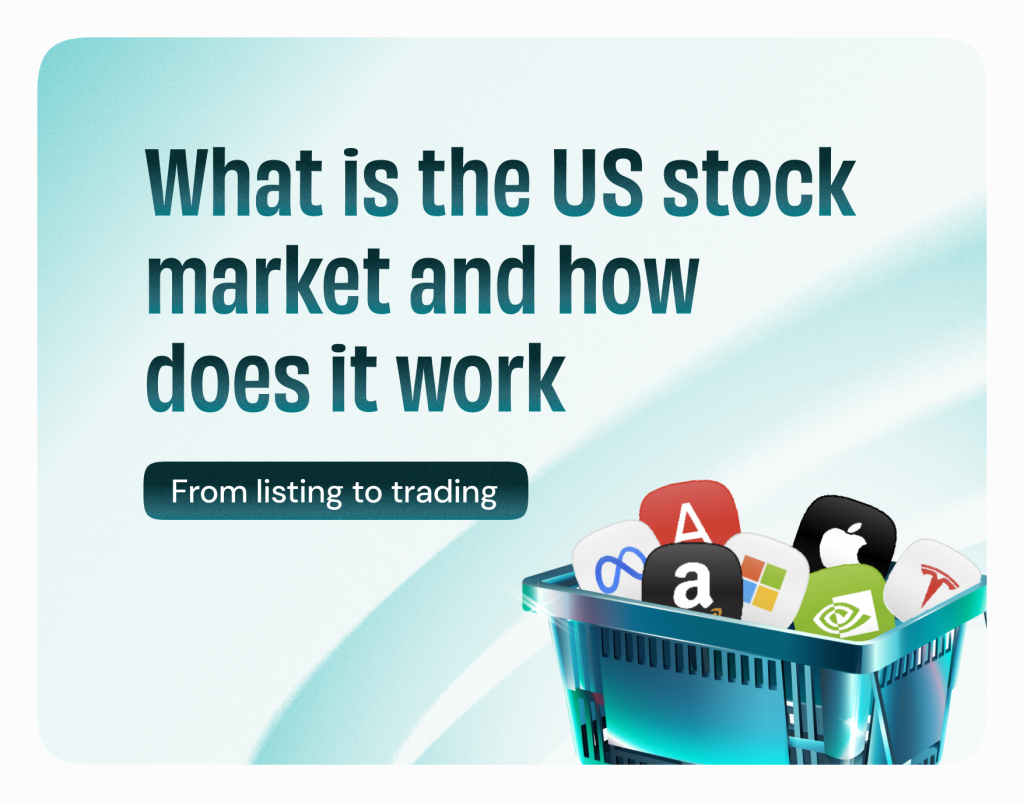
How the US Stock Market Works for Global Investors A clear look at how the world’s largest market operates For most investors today, the US stock market is not just another market. It is the reference point. Whether someone is tracking the US market today , checking the US market open time , using a trading app , or exploring online trading platforms and comparing the best online trading platform in UAE and the best trading platform in UAE, the US market tends to sit at the center of the conversation. This is not accidental. The United States hosts some of the largest, most influential companies in the world. It drives innovation across sectors like technology, healthcare, and finance, and it attracts capital from investors globally. However, for many individuals starting their journey in online stock trading or broader online trading and learning how to start trading stocks, the US market can feel distant or complex. There are exchanges, trading hours, price movements, and a constant flow of information that can seem overwhelming at first. The reality is more structured than it appears. Understanding how the US stock market works does not require deep technical knowledge. It requires clarity on how companies list, how trades happen, and how investors participate via online trading. What Is the Stock Market? At its simplest, the stock market is a system where ownership in companies is bought and sold. Companies list their shares on exchanges to raise capital. Investors purchase those shares, which represent partial ownership in the business. Over time, as companies grow, generate revenue, and expand operations, their value may increase. This is reflected in their share price, which fluctuates based on demand, performance, and broader market conditions. When people search for what is stock market, they are essentially trying to understand this relationship between companies and investors. The market is not just a place for transactions. It is a mechanism through which capital flows into businesses and growth is distributed among participants. The Structure of the US Stock Market The US stock market is built around major exchanges that facilitate trading. The two most prominent are: The New York Stock Exchange (NYSE) The NASDAQ The NYSE is known for hosting many established, large-cap companies, while NASDAQ is often associated with technology and high-growth firms. Both exchanges provide a regulated environment where companies can list their shares and investors can trade them. For someone using online trading platforms or a trading app, these exchanges operate in the background. The platform acts as a bridge, allowing you to access these markets without interacting with the exchange directly. How Companies Enter the Market Before a company’s shares can be traded, it must go through a process known as an Initial Public Offering (IPO). During an IPO: The company offers its shares to the public for the first time Investors can purchase these shares The company raises capital to fund growth Once listed, the company becomes part of the public market. Its shares are now available for trading through stock trading platforms and equity trading platforms. From that point onward, the price of the company’s shares is determined by supply and demand in the market. How Trading Actually Happens When you place an order on a trading platform or trading app, several things happen in the background. Your order is routed through a broker or platform to the exchange. It is then matched with a corresponding order, either from a buyer or a seller. This process happens within seconds, often milliseconds. Prices move continuously because: Investors are constantly buying and selling New information is entering the market Expectations about the future are changing This is why, when you check the US market today, you see constant fluctuations rather than fixed values. Understanding US Market Timings One of the key differences for global investors is timing. The US stock market operates in a different time zone, which means trading hours may fall outside typical working hours in regions like the UAE. The US market open time is: 9:30 AM to 4:00 PM Eastern Time For investors in the UAE, this usually translates to evening and night hours. This timing has two implications: Investors often track markets after their regular workday Market movements can be influenced by global events that occur during the day Many online trading platforms provide extended hours trading, allowing users to place trades outside standard market hours, although liquidity may vary. Why the US Market Matters Globally The US stock market is not just large, it is influential. It represents a significant portion of global market capitalization and includes companies that operate across continents. Key reasons for its global relevance include: A concentration of leading companies across industries High levels of liquidity, which make trading efficient Strong regulatory frameworks that increase transparency Continuous innovation in sectors like technology and healthcare When global investors monitor the US market today, they are often using it as an indicator of broader economic sentiment. The Role of Online Trading Platforms Access to the US stock market has become significantly easier. Earlier, investing in US equities required: High capital thresholds Access to international brokerage services Complex account setups Today, online trading platforms and trading apps have simplified this process. For residents comparing providers, researching the best trading platform in UAE or the best online trading platform in UAE can help align features, fees, and regulation. Investors can now: Open accounts digitally Fund investments seamlessly Trade US stocks directly from their devices This accessibility has made it easier for individuals in the UAE to participate in global markets through online trading without relying solely on traditional stock brokers in Dubai or brokerage companies in Dubai , or other brokers in Dubai. What Drives Market Movements Understanding what moves the market helps investors interpret what they see. Several factors influence stock prices: Company performance, including earnings and revenue Economic indicators such as inflation and interest rates Global events and geopolitical developments Investor sentiment and expectations For example, strong earnings …

What Is the US Stock Market and How It Works | US Market Guide Read More »

Why Investing Beats Saving Over Time | Investing for Beginners UAE

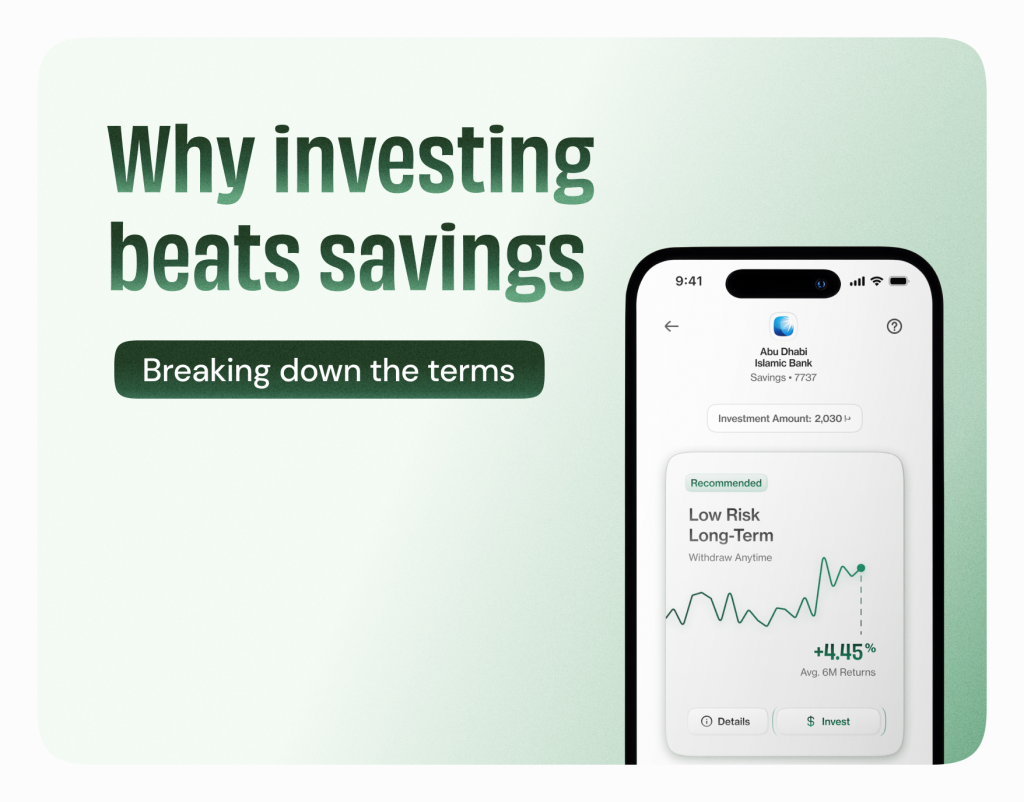
Why Investing Builds More Wealth Than Saving Over Time Most people begin their financial journey with a simple and widely accepted belief: saving money is the safest way to build wealth. It feels responsible, it creates a sense of discipline, and it offers immediate control over one’s finances. To a certain extent, this belief holds true. Saving plays a critical role in building financial stability. It helps create an emergency buffer, supports short-term goals, and ensures that you are prepared for predictable expenses. However, the equation changes when the objective moves beyond stability and shifts toward growth. The moment your goal becomes long-term wealth creation, saving alone starts to show its limitations. This is where investing becomes essential. If you are exploring online trading , evaluating the best trading platform in UAE , reviewing options for the “best trading platform in uae,” or trying to understand how to begin with online stock trading, this distinction is not just helpful, it is foundational. Over time, the difference between saving and investing does not remain marginal. It compounds, and that compounding creates a meaningful gap. Saving vs Investing: Understanding the Real Difference Saving and investing are often spoken about together, but they serve very different purposes within a financial strategy. Saving is designed to preserve money. It prioritises safety and predictability, ensuring that funds remain accessible when needed. Typically, saved money is held in bank accounts where it earns a fixed or relatively low rate of interest. Investing, on the other hand, is designed to grow money. Instead of remaining idle, funds are allocated into assets such as stocks or equities, where they participate in broader market performance. These investments are influenced by business growth, economic trends, and investor sentiment, which introduces variability but also creates the potential for higher returns. The distinction becomes clearer when viewed through the lens of time. Saving is effective for short-term needs such as emergency funds, planned expenses, or liquidity requirements. Investing becomes increasingly important when the focus shifts to long-term outcomes such as wealth creation, financial independence, or beating inflation. The Impact of Inflation on Savings One of the most overlooked factors in personal finance is inflation, and its effect on savings is significant. Inflation gradually reduces the purchasing power of money. This means that over time, the same amount of money will buy fewer goods and services. While this erosion is often subtle in the short term, it becomes substantial over longer periods. For instance, if inflation averages around 4% annually and your savings earn approximately 2%, your money is effectively losing value each year in real terms. This creates a silent gap between what your money is worth today and what it will be worth in the future. Saving ensures stability, but it does not fully protect against this decline. Investing, by contrast, provides a way to counterbalance inflation by allowing money to grow in line with or ahead of it. Why Investing Has a Structural Advantage The advantage of investing is not limited to higher returns alone. It lies in the way those returns accumulate over time. When you invest through online trading platforms or a trading app, your money is exposed to businesses that are actively growing. These companies expand their operations, increase revenues, innovate within their industries, and create value over time. As an investor, your returns are tied to this growth. This is why tracking the US market today offers more than just price movements. It reflects how global businesses are evolving and how that evolution is being valued in real time. Over extended periods, this participation in growth gives investing a structural advantage over saving. Compounding: The Core Driver of Wealth Creation At the centre of investing lies compounding, which is often described as one of the most powerful forces in finance. Compounding occurs when the returns generated by your investments begin to generate additional returns. Instead of earning returns only on your initial capital, you start earning on accumulated gains. For example, an investment of $1,000 that grows by 10% becomes $1,100. In the following year, returns are generated on $1,100 rather than the original amount. This process continues, creating a cumulative effect that accelerates over time. The key factor here is duration. The longer the investment horizon, the more pronounced the compounding effect becomes. Saving, while stable, does not benefit from compounding in the same way because the returns are typically lower and do not scale meaningfully over time. Why Starting Early Matters More Than Starting Big A common misconception, especially in investing for beginners, is that investing requires significant capital. In reality, the size of the initial investment is far less important than the timing of when you begin. Starting early allows your investments to: Benefit from multiple compounding cycles Absorb short-term market fluctuations Grow steadily over extended periods Even small, consistent contributions made through online stock trading platforms can accumulate into meaningful wealth over time. Delaying investing in pursuit of a larger starting amount often results in missed opportunities for growth. A Practical Comparison To understand the difference more clearly, consider two individuals with similar financial habits. The first individual saves $500 every month in an account earning 3% annually. The second individual invests the same amount monthly in equities through a trading platform, earning an average return of 8–10%. Over a period of several years, the difference between the two outcomes becomes significant. The divergence is not driven by effort or discipline, but by the nature of how money grows in each scenario. One approach preserves value. The other builds it. The Role of the Stock Market in Wealth Creation The stock market plays a central role in enabling investment-driven growth. Through stock trading platforms and equity trading platforms, investors gain access to companies that operate at scale, innovate continuously, and generate long-term value. This includes many globally dominant firms listed in the United States, which is why investors frequently monitor: US market today US market open time The US market, in …

Why Investing Beats Saving Over Time | Investing for Beginners UAE Read More »

Stocks vs Shares vs Equities Explained | Online Stock Trading Guide UAE

Stocks vs Shares vs Equities: What You’re Actually Buying When You Invest A clear guide to understanding ownership, without the noise If you are exploring online trading, comparing the best trading platform in UAE, or trying to understand how the stock market works, you will come across three terms almost immediately: stocks, shares, and equities. They are often used interchangeably across online trading platforms, trading apps, and even by stock brokers in Dubai. For someone starting out, this creates confusion at the exact moment clarity is needed. The reality is simpler than it seems. These terms do not represent different investments. They represent different ways of describing the same idea: ownership in a company. Understanding this is not just about terminology. It shapes how you interpret markets, how you choose a trading platform, and how confidently you begin your journey in investing for beginners. What Is the Stock Market? Before breaking down the terms, it helps to understand the system they operate in. At its core, the stock market is a marketplace where investors buy and sell ownership in companies. Companies list themselves on exchanges such as the New York Stock Exchange (NYSE) or NASDAQ to raise capital. Investors then participate by purchasing pieces of these companies. If you are using online stock trading platforms in the UAE, you are essentially connecting to these global exchanges through a brokerage company or a trading platform. The stock market is not just a place where prices move. It is where: Companies raise capital to grow Investors participate in that growth Prices reflect expectations about the future When you track the US market today or follow the US market open time, you are observing this system in motion. Stocks: The Broad View of Investing The term stocks is the most commonly used and the least precise. When someone says they invest in stocks, they are referring to the act of investing in companies in general. It is a high-level way of describing participation in the market. Stocks represent: Ownership across one or multiple companies Exposure to business performance Participation in economic growth If you are evaluating the best online trading platforms or exploring a trading app, this is the language you will see most often. Shares: The Exact Units of Ownership Shares bring precision into the conversation. A share is a measurable unit of ownership in a specific company. When a company lists on the stock market, it divides itself into shares. Each share represents a fraction of that company. When you invest through a stock trading platform, you are not buying the entire company. You are buying specific units of it. This distinction matters when: Tracking how much you own Calculating returns Managing your portfolio over time Equities: The Financial Language Equities is the formal term used across finance. It refers to ownership-based assets, which include stocks and shares. You will often see this term used by: Institutional investors Equity trading platforms Financial reports For most investors using online trading platforms, this is simply the broader category that stocks and shares belong to. A Simple Way to Understand It Instead of overcomplicating it, think of it this way: Equities are the category Stocks are the general idea Shares are what you actually own Different words. Same outcome. You own a part of a company. Where Platforms Like Sav Wealth Fit In Access is what turns understanding into action. Modern investing is no longer limited by geography or large capital requirements. Platforms like Sav Wealth are designed to simplify this access by connecting users directly to global markets, including US equities. Instead of navigating multiple systems or relying on traditional brokers in Dubai, users can: Access US stocks seamlessly Invest using fractional ownership Build diversified portfolios from a single interface This shift is important because it removes the friction between learning about investing and actually starting. Why This Distinction Matters More Than It Seems At first glance, these terms may feel interchangeable. In practice, clarity here changes how you approach investing. It helps you: Navigate online trading platforms with confidence Understand what you are buying on a trading app Compare brokerage companies in Dubai more effectively Most importantly, it removes hesitation. When terminology feels complex, people delay action. When it feels clear, they start. How This Plays Out in Real Investing Consider a simple example. You open a trading app and invest: $100 in Apple $100 in Tesla What happens next? You own shares in both companies These shares form part of your stock portfolio Your investments fall under equities The platform may use different terms, but your position remains the same. You are now an investor. How This Connects to the US Market When you follow the US market today, what you are really tracking is: Changes in share prices Movement in company valuations Shifts in investor sentiment When the market opens during the US market open time, millions of transactions begin across online trading platforms globally. This includes investors using platforms like Sav Wealth, who are participating in the same ecosystem as institutional investors and global funds. Understanding that these movements reflect changes in ownership value makes the market easier to interpret. Common Mistakes to Avoid 1. Treating them as different asset types They are not separate investments. 2. Getting stuck in terminology Clarity comes faster through participation than over-analysis. 3. Waiting for perfect understanding The basics are enough to begin. The Bigger Picture: Ownership Changes Perspective At its core, investing is not about watching prices move on a screen. It is about owning a part of businesses that are building, scaling, and generating value. When you move from: Saving → to investing Observing → to participating You shift your relationship with money. Instead of letting it sit, you put it to work. This is the transition most investing for beginners content tries to explain, often with unnecessary complexity. The simpler version is more useful: You are not just buying a stock. You are buying into a business. Final Thought …

Stocks vs Shares vs Equities Explained | Online Stock Trading Guide UAE Read More »